
Top 5 Applications of Portable Concrete Pump Machines in Modern Construction
Portable concrete pump machines have become an indispensable tool in modern construction, offering flexibility, efficiency, and precision in a wide range of applications. These compact yet powerful machines are designed to transport liquid concrete to hard-to-reach areas, making them ideal for both small-scale and large-scale projects. Here are the top five applications of portable concrete pump machines in today’s construction industry.
1. Residential Construction
Portable concrete pumps are a popular choice for residential projects, such as building foundations, driveways, and patios. Their compact size allows them to navigate tight spaces and narrow pathways, which are common in residential areas. Unlike traditional concrete pouring methods, portable pumps ensure a smooth and even distribution of concrete, reducing the risk of cracks and uneven surfaces. This makes them perfect for homeowners and contractors looking to achieve high-quality results in less time.
2. Commercial and High-Rise Buildings
In commercial construction, time is money, and portable concrete pumps excel in speeding up the process. These machines are capable of pumping concrete to great heights, making them ideal for high-rise buildings and large commercial structures. Their ability to deliver concrete quickly and efficiently ensures that construction deadlines are met without compromising on quality. Additionally, mobile concrete pump for sale reduces the need for manual labor, lowering overall project costs.
3. Infrastructure Development
From bridges and tunnels to roads and highways, portable concrete pumps play a crucial role in infrastructure development. Their mobility allows them to be transported to remote or challenging locations, such as mountainous regions or densely populated urban areas. Portable pumps are particularly useful for pouring concrete in areas with limited access, ensuring that infrastructure projects are completed on time and within budget.
4. Agricultural Projects
Portable concrete pumps are also widely used in agricultural construction, such as building silos, barns, and irrigation systems. These projects often require concrete to be poured in remote or uneven terrains, where traditional methods may not be feasible. Portable pumps provide a reliable solution, ensuring that concrete is delivered precisely where it’s needed. Their efficiency and ease of use make them a favorite among farmers and agricultural contractors.
5. Disaster Recovery and Repair Work
In the aftermath of natural disasters, such as earthquakes or floods, portable concrete pumps are often deployed for repair and reconstruction work. Their ability to operate in confined spaces and deliver concrete quickly makes them invaluable in emergency situations. Whether it’s repairing damaged buildings, bridges, or roads, portable pumps help restore infrastructure and bring communities back to normalcy in record time. Learn more about its applications here: https://aimixconcretesolution.com/concrete-pump/.
Conclusion
Portable concrete pump machines have revolutionized the construction industry by offering a versatile and efficient solution for a wide range of applications. From residential projects to large-scale infrastructure development, these machines have proven their worth in terms of speed, precision, and cost-effectiveness. As construction techniques continue to evolve, portable concrete pumps will undoubtedly remain a key player in shaping the future of modern construction.
Whether you’re a contractor, builder, or DIY enthusiast, investing in a portable concrete pump can significantly enhance the quality and efficiency of your projects.
Can a Concrete Mixer Pump Produce C30, C40, or Lower Strength Concrete?
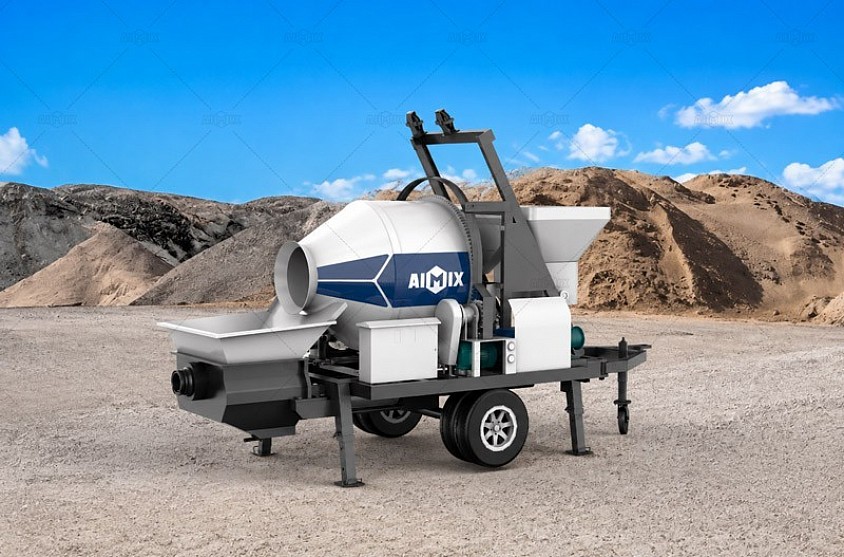
Concrete strength requirements vary significantly between construction projects. From residential foundations and rural roads to commercial buildings and infrastructure works, contractors often need concrete grades such as C20, C30, or C40 depending on structural demands. This raises an important question when selecting equipment: can a concrete mixer pump produce different concrete strength grades, or is it limited to specific applications? A concrete mixer pump combines concrete mixing and pumping functions into a single machine, creating a compact solution for projects that require flexible concrete production and delivery. However, the final concrete strength does not come from the equipment alone. It depends on the concrete mix design, raw material proportions, cement type, aggregate characteristics, water-cement ratio, and quality control during production. Understanding how these factors interact helps contractors choose the right equipment and achieve the required concrete performance.
How Concrete Strength Grades Are Determined in a Mixer Pump System
Concrete Grade Depends on Mix Design, Not Only Equipment Type
Concrete strength grades such as C30 and C40 represent the compressive strength that concrete can achieve after curing under standard conditions. The number indicates the designed strength level, which is usually measured in megapascals (MPa). A common misconception is that certain concrete machines can only produce certain strength grades. In reality, a concrete mixer pump is not restricted to one concrete strength category. The machine acts as a production and delivery system, while the concrete formula determines the final performance. For example, producing C30 concrete generally requires a carefully balanced combination of cement, sand, gravel, water, and additives. Higher-strength concrete such as C40 may require a lower water-cement ratio, higher-quality aggregates, additional admixtures, or more precise mixing control. The role of the mixer pump is to ensure these materials are evenly blended and transported efficiently. If the equipment provides accurate batching, effective mixing, and stable pumping performance, it can support a wide range of concrete grades.
The Importance of Material Proportion and Mixing Quality
Concrete strength is highly sensitive to small changes in composition. Excess water may improve workability but reduce final strength. Insufficient mixing may create uneven distribution of cement paste, resulting in weak zones inside the concrete structure. A reliable concrete mixer with pump for sale helps overcome these challenges through consistent mixing performance. The mixing system must achieve sufficient homogenization so that cement, aggregates, and additives form a uniform concrete mixture before pumping. For lower-strength concrete grades, such as C15 or C20, the mix design may require less cement content and a different aggregate ratio. For C30 or C40 concrete, stricter control is usually needed to maintain durability and structural reliability. Therefore, the concrete mixer pump provides the mechanical foundation, while engineering calculations and material selection determine the final concrete grade.
Can Concrete Mixer Pumps Handle C30 and C40 Concrete Production?
Producing C30 Concrete with a Concrete Mixer Pump
C30 concrete is one of the most commonly used grades in construction. It is widely applied in building foundations, slabs, beams, columns, road projects, and general structural applications. A concrete mixer pump is well suited for C30 production because this strength grade typically balances strength, workability, and cost efficiency. With a proper mix ratio and suitable raw materials, the machine can produce concrete that meets C30 performance requirements while providing continuous pumping capability. For projects with limited working space, such as urban construction sites or small infrastructure developments, a mixer pump offers a practical advantage. It eliminates the need for separate mixing equipment and concrete delivery systems, reducing equipment coordination and improving construction efficiency.
Producing C40 and Higher Strength Concrete
C40 concrete requires more precise production control compared with lower-strength grades. It is often used in demanding applications such as heavy-load structures, bridge components, and high-performance construction projects. A concrete mini pump can produce C40 concrete when the machine configuration, material quality, and mix design are appropriate. However, achieving higher strength requires attention to several technical factors. The cement content, aggregate grading, moisture control, and admixture dosage must be carefully managed. The mixing system should provide sufficient blending intensity to achieve a dense and uniform concrete structure. In addition, pumping high-strength concrete requires proper consideration of concrete flowability. A mixture that is too dry may create pumping difficulties, while excessive fluidity may affect strength development. The balance between pumpability and structural performance is essential. Modern mixer pumps with efficient mixing mechanisms and precise control systems can support these requirements, making them suitable for projects requiring stronger concrete grades.
Factors to Consider When Using a Concrete Mixer Pump for Different
Concrete Grades
Select Equipment Based on Project Requirements
Choosing a concrete mixer pump should begin with understanding the actual construction requirements. The required concrete strength, pumping distance, output capacity, and working environment all influence equipment selection. A small residential project may mainly require C20 or C25 concrete, while industrial or infrastructure projects may demand C30, C40, or even higher grades. Selecting a machine with appropriate mixing capacity and pumping performance ensures better efficiency and avoids unnecessary investment.
Maintain Proper Production Control for Consistent Results
Even the most advanced concrete mixer pump cannot compensate for poor-quality materials or incorrect mix proportions. Regular inspection of aggregates, accurate weighing, and proper maintenance are essential for stable concrete production. Operators should also adjust the mix according to environmental conditions. Temperature, humidity, and transportation distance can influence concrete performance and should be considered during production planning.
Concrete Mixer Pumps Offer Flexible Solutions for Various Projects
The greatest advantage of a concrete mixer pump is its versatility. By integrating mixing and pumping functions, it provides a compact and efficient solution for projects requiring different concrete grades. Whether producing lower-strength concrete for basic construction or C30 and C40 concrete for structural applications, the equipment can adapt when supported by the correct mix design and operating practices. Ultimately, concrete strength is created through the combination of engineering knowledge, quality materials, and reliable equipment. A concrete mixer pump is not limited by a specific concrete grade; instead, it provides the production capability needed to achieve different strength requirements across diverse construction scenarios.