
Knowledge about Crushing Plant Blogs
Why Limestone Powder Quality Starts Before the Grinding Mill
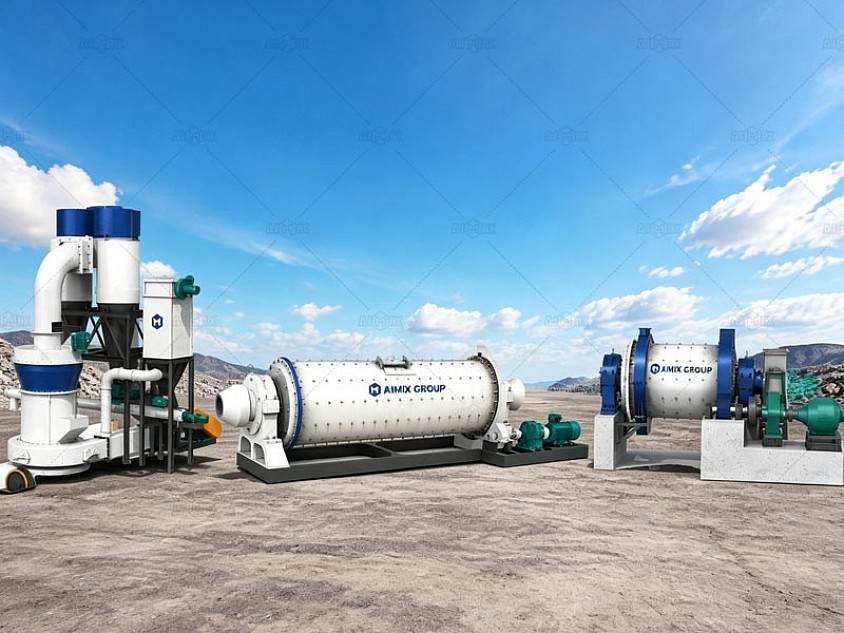
Limestone powder quality is often associated with the performance of the grinding mill, but the process actually begins much earlier. The mill cannot compensate indefinitely for unsuitable feed material, excessive moisture, inconsistent particle size, or poorly controlled impurities. Before limestone enters the grinding chamber, its physical and chemical characteristics have already established much of the eventual product's behavior. Feed preparation therefore becomes a foundational stage in powder production rather than a peripheral task. For producers seeking consistent fineness, stable throughput, and predictable energy consumption, understanding what happens before grinding is essential.
How Limestone Feed Characteristics Influence Grinding Performance
Raw Limestone Composition Determines the Grinding Challenge
Limestone is not a uniform material. Its composition can vary according to geological formation, extraction location, and deposit depth. Calcium carbonate may dominate, but different proportions of clay, silica, dolomite, iron-bearing minerals, and other impurities can alter grinding behavior. Harder inclusions may resist size reduction while softer zones break more readily. This heterogeneity can create an uneven feed stream entering the mill, making it more difficult to maintain stable grinding conditions. For applications requiring controlled limestone powder quality, raw material characterization should therefore precede equipment selection and production planning. Chemical composition, hardness, moisture, and initial particle size all deserve attention.
Moisture Content Can Change the Behavior of the Feed
Moisture is another frequently underestimated variable. Excessively wet limestone can become more difficult to convey and may encourage material adhesion inside the grinding system. Fine particles can agglomerate, reducing the efficiency of classification and increasing the likelihood of blockages or buildup. A grinding mill is fundamentally a size-reduction machine, not a universal remedy for poorly conditioned feed. If limestone contains substantial moisture, an appropriate drying or pre-drying stage may be necessary. Controlling moisture before grinding helps the material flow more consistently and allows the mill and classifier to operate within a more predictable envelope.
Stable Feed Creates Stable Grinding Conditions
Grinding efficiency depends heavily on consistency. When feed properties fluctuate sharply, operators may need to adjust feed rate, airflow, grinding pressure, or classification parameters. A more homogeneous feed allows the grinding system to operate with fewer abrupt corrections. This can improve both product consistency and operational stability.
Why Crushing, Drying, and Screening Shape Final Powder Quality
Pre-Crushing Determines How Efficiently the Mill Works
Large limestone rocks should not simply be fed into a fine grinding system without appropriate size reduction. Pre-crushing breaks oversized material into a more manageable feed size and reduces the burden placed on the ball mill. A properly configured crusher can establish a relatively uniform feed size before material reaches the mill. This matters because grinding energy is strongly influenced by the size reduction ratio required. When oversized lumps enter the mill, part of the available energy may be consumed inefficiently in breaking down material that should have been reduced earlier. Pre-crushing therefore helps reserve the grinding stage for the finer size-reduction work it is designed to perform.
Screening Removes Oversized or Undesirable Material
Screening provides another layer of process control. It can separate particles that are too large for efficient milling and help prevent foreign or undesirable material from entering subsequent stages. Uniform feed size is especially important when a limestone powder production line is expected to maintain a narrow product specification. Consistent feed characteristics make downstream grinding and classification more predictable. The objective is not merely to reduce rock size. It is to establish a feed stream with controlled characteristics.
Drying Can Be Critical for Fine Limestone Powder
For applications requiring very fine limestone powder, moisture control becomes increasingly important. Fine particles have a greater tendency to adhere to equipment surfaces when moisture is excessive. A suitable drying stage can reduce this problem while improving material flow through the grinding and classification system.
Balancing Drying With Energy Consumption
Drying itself consumes energy, so excessive drying is not necessarily advantageous. The target should be sufficient moisture reduction to support stable milling rather than indiscriminate removal of all moisture. This balance becomes particularly important for commercial producers, where energy efficiency directly influences production economics.
How Proper Pre-Grinding Preparation Improves the Entire Milling Process
Consistent Feed Supports Consistent Fineness
Limestone powder may be required for different applications, including cement production, construction materials, agriculture, fillers, and industrial processing. Each application can impose different requirements for fineness and consistency. A grinding mill can produce the desired particle size only when the material entering it behaves predictably. Variations in feed hardness, moisture, and size can cause fluctuations in grinding efficiency and classifier performance. Proper preparation therefore acts as a stabilizing mechanism for the entire process.
Better Feed Preparation Can Reduce Unnecessary Wear
Oversized particles and hard mineral inclusions can increase mechanical stress and accelerate wear on grinding components. While wear is inevitable in mineral processing, poor feed preparation can intensify it unnecessarily. Removing unsuitable material and establishing an appropriate feed size can help protect grinding rollers, grinding rings, liners, or other wear components, depending on the mill configuration. This has an economic consequence. Longer component service intervals can reduce maintenance interruptions and help maintain more predictable operating costs.
Grinding Mill Selection Still Matters—but It Comes Later
The grinding mill remains central to limestone powder production, but it should be selected according to the characteristics of the prepared feed and the requirements of the final product. A Raymond mill, vertical mill, ball mill, or other grinding technology may suit different production objectives. The appropriate choice depends on factors such as required fineness, capacity, moisture, material hardness, energy considerations, and product application. However, even a sophisticated mill cannot fully overcome an ill-prepared feed stream. The most reliable limestone powder production process is therefore built as a chain rather than a single machine. Quarrying determines the raw material, crushing establishes feed size, screening improves uniformity, drying controls moisture where necessary, and the grinding mill performs the final major stage of size reduction. In this sense, limestone powder quality truly starts before the grinding mill. The mill determines how effectively prepared material can be pulverized and classified, but the preparation stages determine how consistently that mill can perform. For producers seeking stable fineness, efficient operation, controlled wear, and dependable product quality, better grinding begins with better feed.